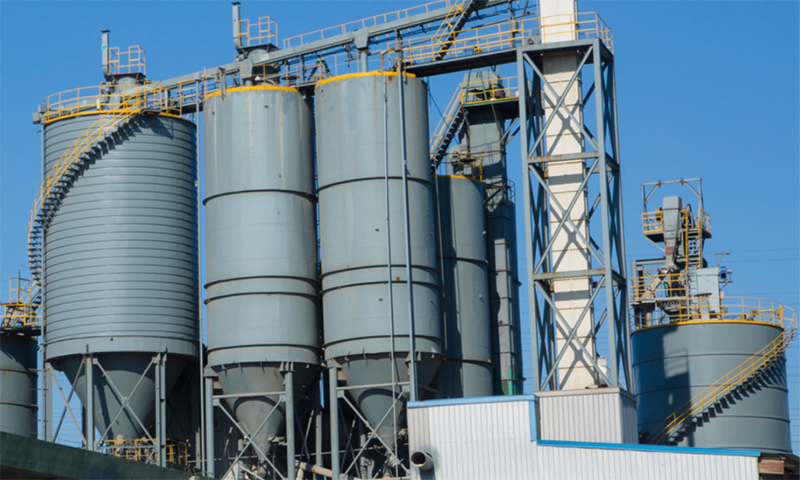



Los bloques de hormigón celular esterilizado en autoclave (AAC) se han convertido en una opción popular en la industria de la construcción debido a su sostenibilidad, su peso ligero y sus excepcionales propiedades de aislamiento. el Línea de producción de bloques AAC Implica un proceso de varios pasos que transforma materias primas básicas como cemento, cal, arena, agua y polvo de aluminio en bloques de construcción duraderos.
Elegir y preparar materias primas
La calidad de los bloques AAC depende en gran medida de las materias primas utilizadas en la línea de producción. Garantizar la consistencia y las proporciones correctas de estos materiales es vital para las propiedades físicas y mecánicas deseadas del producto final. A continuación se muestran los componentes clave:
Cemento
El cemento es el principal agente aglutinante en la línea de producción de bloques AAC y proporciona resistencia y durabilidad. El cemento Portland común (grado OPC 53) se usa comúnmente debido a su alta resistencia a la compresión y su rápido tiempo de fraguado. La calidad del cemento se prueba en cuanto a su finura, gravedad específica y consistencia antes de su uso para garantizar que se cumplan los estándares requeridos.
lima
La cal juega un papel crucial en las reacciones químicas que generan hidratos de silicato de calcio, que contribuyen a la resistencia de los bloques. Se utilizan tanto cal viva como cal hidratada dependiendo de las necesidades específicas de la configuración de producción. El tamaño de las partículas de cal, normalmente entre 45 y 75 micrones, influye en gran medida en su reactividad durante el proceso de esterilización en autoclave.
Arena o cenizas volantes
La arena o las cenizas volantes forman la mayor parte de los bloques de AAC, lo que influye en su resistencia general. Las cenizas volantes son una opción preferida debido a sus beneficios ambientales como subproducto de la combustión del carbón. Los materiales se muelen hasta obtener un polvo fino para facilitar las reacciones químicas necesarias durante el curado.
Yeso
Se añade yeso en pequeñas cantidades para regular el tiempo de fraguado de la mezcla, asegurando trabajabilidad y facilitando la formación de hidratos de sulfato de calcio que ayudan a fortalecer los bloques.
Polvo de aluminio
El polvo de aluminio es el elemento clave que introduce porosidad en los bloques de AAC. Reacciona con cal y agua para producir gas hidrógeno, formando pequeñas burbujas en toda la suspensión y dando a los bloques su estructura celular liviana. La cantidad de polvo de aluminio se controla cuidadosamente para lograr la porosidad y resistencia requeridas.
Mezcla de Materias Primas
La etapa de mezcla en la línea de producción de bloques de AAC garantiza que las materias primas se distribuyan uniformemente y que las reacciones químicas que forman los bloques se produzcan de manera uniforme. El proceso implica una mezcla tanto seca como húmeda.
- Mezclado en seco: El cemento, la cal, el yeso y la arena fina o las cenizas volantes se mezclan en seco para asegurar una distribución uniforme de los sólidos.
- Adición de agua: Se agrega agua a la mezcla seca para crear una suspensión, con una proporción controlada de agua a sólido de aproximadamente 0,6 a 0,65.
- Polvo de aluminio Addition: Una vez que se forma la suspensión, se agrega polvo de aluminio, iniciando la reacción que hace que la suspensión se expanda. Este paso debe ser rápido para evitar la formación prematura de gases.
Todo el proceso se completa en un plazo de tiempo específico para garantizar la homogeneidad sin mezclas excesivas, que podrían dificultar las reacciones químicas necesarias para una correcta expansión.
Lanzar la lechada
Después de mezclar, la suspensión se vierte en moldes, donde comienza a expandirse. Los moldes suelen estar hechos de acero y tratados con un agente desmoldante para evitar que se peguen. Los pasos clave incluyen:
- Preparación del molde: Los moldes se preparan para dejar espacio para la expansión a medida que el polvo de aluminio reacciona con la cal y el agua, lo que hace que la mezcla suba.
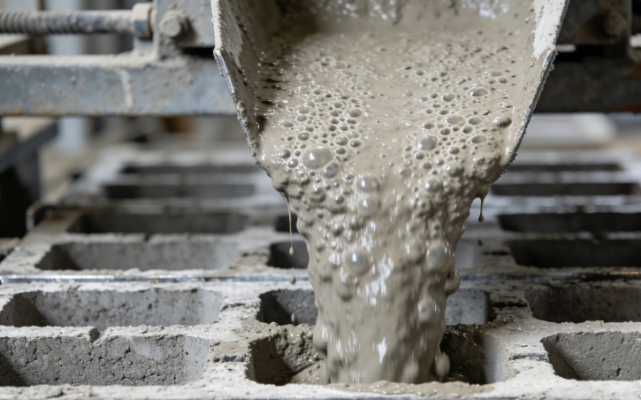
- Verter la lechada: Maquinaria automatizada vierte la mezcla en los moldes para asegurar un llenado consistente.
- Expansión: A medida que la lechada fragua, se expande y aumenta su volumen hasta en un 50%. La mezcla forma pequeñas burbujas de aire, lo que da como resultado la estructura celular que hace que los bloques de AAC sean livianos pero fuertes.
- Tiempo de fraguado: La lechada fragua durante 2 a 4 horas, formando una “torta verde” estable que luego se cortará en bloques individuales.
Precurado
El precurado es un paso crítico en la línea de producción de bloques de AAC, ya que garantiza que la torta verde adquiera la resistencia suficiente para resistir el proceso de corte posterior. Durante el precurado, los niveles de temperatura y humedad se controlan cuidadosamente para evitar un secado o agrietamiento prematuro.
- Control de temperatura: El proceso ocurre a temperatura ambiente o ligeramente elevada (alrededor de 35°C a 40°C).
- Control de humedad: La humedad se mantiene entre el 50% y el 70% para evitar que la torta verde se seque demasiado rápido.
- Duración: El precurado suele durar entre 2 y 4 horas, lo que permite que la torta verde alcance suficiente dureza para manipularla y al mismo tiempo permanezca lo suficientemente suave para cortar.
Cortar el pastel
Una vez que se completa el precurado, la torta verde se transporta a la sección de corte. El proceso de corte es crucial para lograr tamaños y formas de bloques uniformes.
- Método de corte: Se utilizan alambres de alta resistencia para cortar la torta verde tanto horizontal como verticalmente, lo que garantiza dimensiones precisas y reduce el desperdicio de material.
- Tamaños personalizados: Si bien los tamaños de bloque estándar (por ejemplo, 600 mm x 200 mm x 100 mm) son comunes, se pueden producir tamaños personalizados según los requisitos del proyecto.
- Recorte de bordes: Después del corte, se recorta el exceso de material de los bordes para garantizar que los bloques cumplan con las tolerancias dimensionales.
Autoclave
La esterilización en autoclave es la etapa importante en la línea de producción de bloques de AAC. Se trata de un curado con vapor a alta presión que fortalece los bloques y les confiere sus propiedades finales.
- Cargando el Autoclave: Los bloques cortados se colocan en carros de autoclave y se transportan con ruedas hasta las cámaras del autoclave, donde los bloques se someten a vapor a alta presión a temperaturas de hasta 180 °C.
- Curado con vapor a alta presión: Los bloques se curan durante 8 a 12 horas, durante las cuales la cal, el cemento y la sílice reaccionan para formar hidratos de silicato de calcio, lo que les da resistencia a los bloques.
- Enfriamiento: Después del proceso de autoclave, los bloques se enfrían gradualmente para evitar choques térmicos y grietas.
Desmoldeo y acabado
Una vez que se completa el proceso de esterilización en autoclave, los bloques se desmoldan y se enfrían a temperatura ambiente.
- Desmoldeo: Los bloques se retiran cuidadosamente de sus moldes.
- Acabado superficial: Cualquier aspereza o imperfección se suaviza con un equipo de lijado.
- Recorte de bordes: Un recorte adicional garantiza que los bloques estén dentro del tamaño y la tolerancia especificados para uso en construcción.
Control de calidad y pruebas
El control de calidad es una parte fundamental de la línea de producción de bloques AAC, ya que garantiza que el producto final cumpla con los estándares de la industria.
Pruebas de densidad: Garantiza que los bloques tengan una densidad entre 500 y 800 kg/m³, fundamental para su aislamiento térmico y resistencia.
Pruebas de resistencia a la compresión: Los bloques se prueban para garantizar que puedan soportar la carga requerida.
Pruebas de aislamiento térmico: Mide la resistencia al calor de los bloques, asegurando que funcionen bien en edificios energéticamente eficientes.
Pruebas de absorción de agua: Garantiza que los bloques resistan la humedad, previniendo la humedad y mejorando la durabilidad.
Precisión dimensional: Asegura que los bloques cumplan con las dimensiones requeridas, reduciendo la necesidad de ajustes durante la construcción.
Embalaje y envío
Una vez que los bloques pasan todos los controles de calidad, se empaquetan cuidadosamente para su envío.
- Paletizado: Los bloques se apilan sobre paletas de madera o plástico para facilitar su transporte.
- Envoltura: Los pallets están envueltos en film plástico para protegerlos durante el tránsito.
- Etiquetado: Cada palet está etiquetado con información clave, incluido el tamaño del bloque, el número de lote y la fecha de fabricación.
Finalmente, los bloques se cargan en camiones para su entrega en las obras.
Conclusión
La línea de producción de bloques AAC es un proceso altamente controlado que involucra múltiples etapas, cada una de las cuales es crítica para garantizar que los bloques finales cumplan con los estándares requeridos de resistencia, durabilidad y rendimiento. Desde la selección de la materia prima hasta el control de calidad, cada paso juega un papel en la creación de estos materiales de construcción innovadores, que ofrecen soluciones sostenibles y energéticamente eficientes para la construcción moderna.
Preguntas frecuentes
1. ¿Cuáles son los principales materiales utilizados en la línea de producción de bloques AAC?
Los materiales primarios son cemento, cal, arena o cenizas volantes, yeso y aluminio en polvo. Estos componentes se mezclan y procesan para formar los bloques de AAC.
2. ¿Cuál es el propósito del autoclave en el proceso de producción de bloques de AAC?
El autoclave implica curar los bloques con vapor a alta presión, lo que les ayuda a alcanzar su resistencia y durabilidad finales. Este proceso acelera las reacciones químicas que dan fuerza a los bloques de AAC.
3. ¿Cómo se crea la porosidad en los bloques AAC?
La porosidad se crea mediante la reacción del polvo de aluminio con cal y agua. El gas hidrógeno producido forma pequeñas burbujas de aire, creando la estructura celular liviana de los bloques.
4. ¿Cuáles son los beneficios de utilizar bloques AAC en la construcción?
Los bloques AAC son conocidos por su ligereza, propiedades de aislamiento térmico, resistencia al fuego y sostenibilidad. También ayudan a reducir el peso total de los edificios, mejorando la eficiencia energética.
5. ¿Cómo se realizan el control de calidad y las pruebas en la línea de producción de bloques AAC?
El control de calidad incluye pruebas de densidad, resistencia a la compresión, aislamiento térmico, absorción de agua y precisión dimensional. Estas pruebas garantizan que los bloques cumplan con los estándares de la industria y los requisitos del cliente.